Swati Nakshatra
स्वाति नक्षत्र
Swati is the fifteenth Nakshatra in Vedic astrology, symbolized by a swaying shoot and governed by Vayu and Rahu. Discover its core astrological features, symbol, four padas, and practical suitability for commercial spaces, airflow optimization, and property transactions.
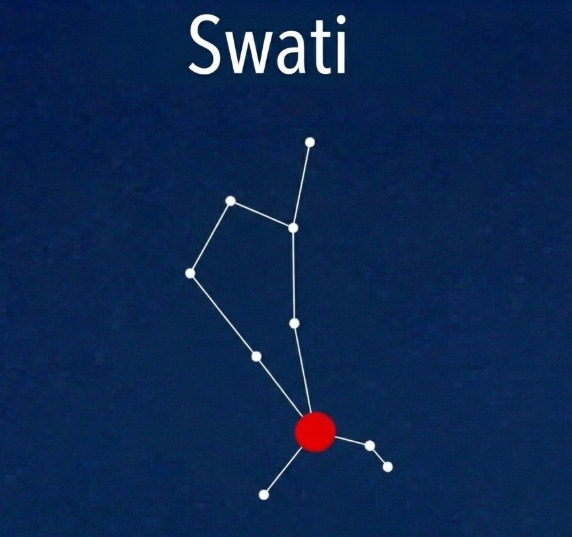
Swati derives its name from Swa, meaning "self" or "independent," and is often translated as "the self-going star" or "the sword." It is the fifteenth Nakshatra in the 27-Nakshatra sequence and lies entirely within the airy, balanced sign of Libra, embodying independence, flexibility, adaptability, and harmonious movement.
The young plant shoot swaying in the wind or a coral/sword symbolises resilience through flexibility, self-reliance, gentle growth, and the capacity to thrive in changing environments. Consequently, Swati is traditionally associated with trade, commerce, ventilation, open spaces, and smooth transitions.
Nakshatra | |
Nakshatra (Constellation) | Swati |
Nakshatra Grah (Planet) | Rahu |
Symbol | Young Plant Shoot Swaying in the Wind / Coral / Sword |
No | |
No | |
Nadi | Antya |
Yoni | Mahisha (Buffalo) |
Gana | Dev |
Aaradhya-Vriksh | Arjun (Terminalia arjuna) |
Daan | Laal Gaay |
Devta | Vayu (God of Wind & Life Breath) |
Tiryakmukha Nakshatra (Horizontal / Forward-Facing) | |
Sulochana (Clear-Eyed Nakshatra) | |
Agni (Fire) | |
Chara / Chala (Movable & Dynamic) | |
Core traits | Independent, adaptable, diplomatic, entrepreneurial, graceful, resilient, and attuned to balance and freedom |
Nakshatra Rashi | |
Rashi | Libra |
Degree | 06°40′ – 20°00′ in Libra |
Rashi Grah (Planet) | Shukra (Venus) |
Rashi Varna | Shudra |
Rashi Vashya | Dwipad / Manav (Human) |
Rashi Tatva | Vayu (Air) |
Nakshatra Padas | ||||
Details | First Pada | Second Pada | Third Pada | Fourth Pada |
Pada Rashi | Dhanu (Sagittarius) | Makar (Capricorn) | Kumbh (Aquarius) | Meen (Pisces) |
Degrees | 06°40′ – 10°00′ | 10°00′ – 13°20′ | 13°20′ – 16°40′ | 16°40′ – 20°00′ |
Pada Planet | Guru (Jupiter) | Shani (Saturn) | Shani (Saturn) | Guru (Jupiter) |
Letter (English) | Ru | Re | Ro | Ta |
Letter (Hindi) | रु | रे | रो | ता / त |
Traits | Curious, idealistic, independent, and freedom-loving | Disciplined, practical, commercially savvy, and structured | Innovative, strategic, socially connected, and forward-thinking | Compassionate, adaptable, artistic, and spiritually receptive |
Property and Vastu Suitability under Swati Nakshatra
Commercial Spaces, Retail & Trading Hubs (Highly Favorable): Classified as a Chara (movable) nakshatra in Libra, Swati is exceptionally auspicious for buying, leasing, or inaugurating shops, trading offices, showrooms, and logistics businesses.
Ventilation, Windows & North-West Zone Setup (Highly Favorable): Governed directly by Vayu (the Wind God), it is ideal for installing windows, air-conditioning systems, balconies, courtyards, and balancing the North-West (Vayavya) Vastu zone.
Landscaping, Gardens & Plantations (Favorable): Aligning with its symbol of a tender shoot swaying in the breeze, it supports planting gardens, green balconies, and open-air terraces.
Rental Agreements & Short-Term Properties (Favorable): Its Chara (dynamic) nature favors properties meant for rental income, quick resale, or temporary occupancy.
Permanent Residential Bhoomi Pujan & Griha Pravesh (Moderately Favorable / Conditional): While its Dev Gana brings gentle positivity, Chara (movable) stars promote movement rather than stillness—making it better suited for commercial openings or rental shifts than anchoring a permanent, multi-generational family residence.
Swati Nakshatra is best harnessed in Vastu for energizing commercial enterprises, optimizing airflow and open spaces, and facilitating smooth property transitions rather than anchoring fixed domestic stillness