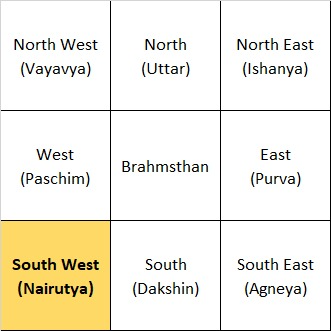
Nairitya Kon (South West)
नैऋत्य कोण
Nairitya Kon, or the South-West corner, is associated with Nirriti and the Earth element. It represents stability, strength, authority and grounding, making it a preferred zone for the master bedroom, heavy storage and other substantial structures in a house or plot.
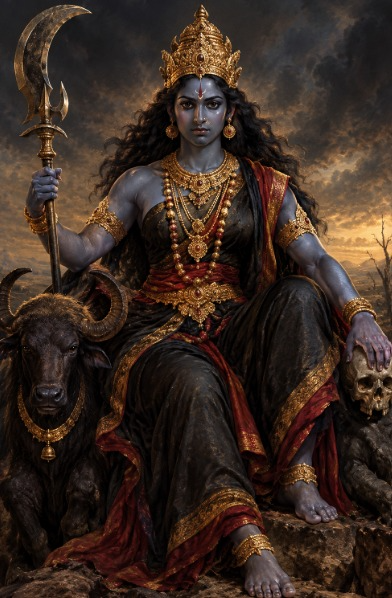
The name comes from "Nirriti" (निरृति), a Vedic deity associated with dissolution, decay and destruction. Nairitya is regarded as the guardian deity of the South-West direction. Therefore, "Nairitya Kon" refers to the "Corner of Nirriti". In Vastu Shastra, this direction is associated with stability, strength, authority and grounding. It represents the foundation on which a family, relationship or organisation builds its long-term security.
Planet
This direction is associated with the planet Rahu. Rahu represents ambition, material aspirations, worldly pursuits and unconventional growth. Its association with the South-West highlights the importance of stability, control and disciplined management of material affairs.
Element
Earth element (Prithvi Tattva) is associated with the South-West in Vastu practice. Earth symbolises stability, firmness, strength and permanence. Just as the earth provides a firm foundation for life, this direction represents stability and support within a house or property.
Best: What Should Be Placed Here
Master Bedroom: The South-West is considered one of the most suitable locations for the master bedroom. It is traditionally associated with stability, authority and restful living. It is generally preferred for the head of the family or the owners of the property.
Heavy Storage: Heavy cupboards, wardrobes, furniture and storage units can be placed in this direction. The South-West is traditionally considered suitable for accommodating heavier structures and objects.
Locker and Safe: A locker or safe used for storing valuables, important documents and wealth can be considered in this zone. Its exact positioning and opening direction should be assessed separately.
Overhead Water Tank: The South-West is commonly preferred for an overhead water tank because of the traditional principle of keeping this zone relatively heavier and elevated than the North-East. Structural loading and engineering requirements must always take priority.
Staircases: A staircase can be accommodated in this direction more towards the South or West, as it contributes to the heavier and more substantial character traditionally recommended for this zone.
Avoid: What Not to Do Here
Underground Water Bodies: Avoid placing underground water tanks, borewells or wells in the South-West. Since this direction is associated with the Earth element and stability, large underground water installations are traditionally considered unsuitable here.
Open Spaces and Large Openings: Avoid keeping this corner excessively open or having large, unprotected openings. The South-West is traditionally recommended to be relatively enclosed, heavier and more protected than the North-East.
Main Entrance: The South-West is generally not considered a preferred location for the main entrance. However, the suitability of an entrance should be assessed based on its precise position, the relevant Vastu pada and the overall layout rather than direction alone.
Pooja Room: The South-West is generally not the preferred location for a dedicated pooja room or meditation space. The North-East is traditionally considered more suitable for these activities.
Kitchen: The South-West is not generally recommended as the first preference for a kitchen. The South-East, associated with Agni Tattva, is traditionally considered more suitable for cooking activities.