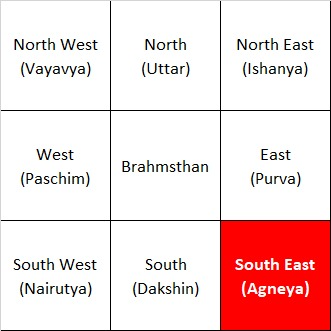
Agneya Kon (South East)
आग्नेय कोण
Agneya Kon, or the South-East corner, is associated with Agni Dev and the Fire element. It represents energy, transformation, vitality, and activity, making it the ideal zone for the kitchen and fire-related functions in a house or plot.

The name comes from "Agni," the Sanskrit word for fire and the name of the Vedic deity associated with fire. Agni is regarded as the divine force that transforms, purifies and sustains life through heat and energy. Therefore, "Agneya Kon" translates to the "Corner of Agni (Fire)". This direction is associated with energy, transformation, vitality and the ability to take action.
Planet
This direction is governed by the planet Venus (Shukra). Venus represents luxury, comfort, beauty, relationships and material pleasures. Its association with Agni brings together the principles of energy, activity, creativity and material prosperity.
Element
Fire element (Agni Tattva) is associated with the South-East in Vastu Shastra. Fire symbolises energy, heat, transformation and purification. It is the element that converts raw materials into usable forms and sustains various activities essential to everyday life.
Best: What Should Be Placed Here
Kitchen: The South-East is considered the most suitable location for the kitchen, as cooking involves the direct use of fire. The cooking stove or hob is traditionally preferred in this zone. Proper ventilation, fire safety and convenient movement within the kitchen should also be ensured.
Electrical Equipment: Electrical appliances such as inverters, generators, transformers and other equipment associated with heat and energy can be accommodated here, subject to electrical safety and ventilation requirements.
Heating Equipment: Geysers, boilers and other heating appliances can be placed in this direction, provided their installation complies with the relevant safety and structural requirements.
Work and Activity Spaces: Spaces that involve active work, equipment or regular operations can be considered for this zone. It is associated with dynamism, energy and transformation.
Avoid: What Not to Do Here
Underground Water Bodies: Avoid locating underground water tanks, borewells or wells in the South-East, as this direction is traditionally associated with the fire element. Water-related installations should preferably be planned in accordance with the overall Vastu layout.
Bedrooms: A bedroom in the South-East is traditionally considered less suitable because of the association with fire and heightened activity. If an existing bedroom is located here, its suitability should be evaluated in relation to its occupants, usage and the overall layout.
Pooja Room: The South-East is generally not the preferred location for a dedicated pooja room or meditation space. The North-East is traditionally considered more suitable for such activities.
Water-Heavy Areas: Avoid placing swimming pools, large water features or other major water installations in this corner, as they introduce an element traditionally considered contrary to the fire-dominated nature of this direction.