Soma Devta
सोम
Positioned immediately after absolute North, this deeply nourishing energy field represents the Moon God and the celestial nectar (Amrita), directly regulating emotional peace, mental clarity, steady financial liquidity, and healing rejuvenation within the household.
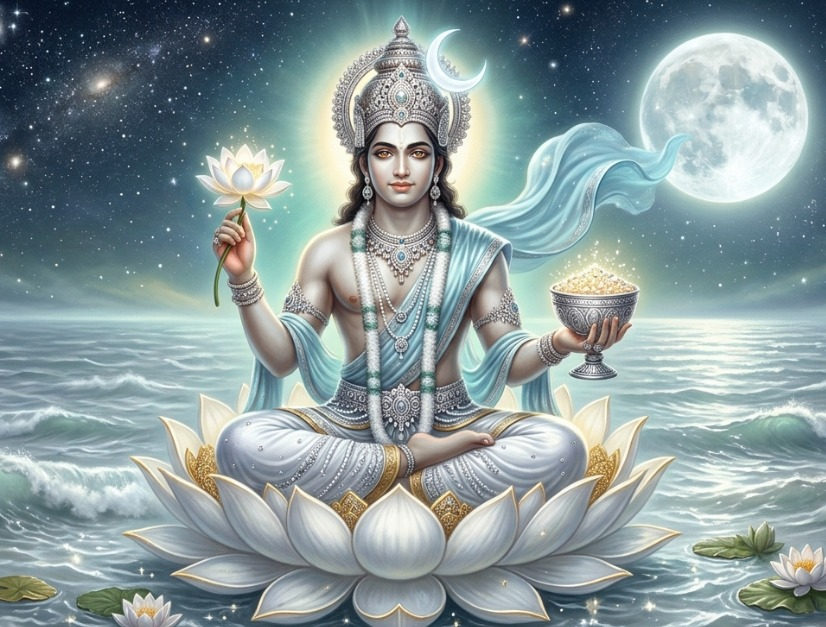
Soma (traditionally representing Chandra, as well as the sacred rejuvenating Somras of the Vedas) is the Vedic devta associated with mental tranquility, emotional nourishment, steady wealth flow, and soothing illumination. Positioned right at the heart of the Uttar disha Jal tatva quadrant, this energy field controls how calmly residents process stress, maintain liquid cash reserves, and experience domestic harmony.
Pada in Vastu Purush Mandal
Soma resides as the fifth energy field (pada) along the Uttar disha outer perimeter. He sits directly next to Bhallat (the 4th pada / N4), initiating the North-to-North-East segment of the Northern axis right after absolute North (0.0°/360°) and transitioning toward Bhujang (the 6th pada / N6).
What does this Pada do
Soma provides the cooling, soothing energy required to calm an agitated mind, maintain consistent liquid cash flow, foster creative inspiration, and bring healing peace to interpersonal relationships inside the home.
Probable Signs of an Imbalance
If this Pada is blocked or disturbed by fire elements, heavy earth clutter, or toilets, the following issues often manifest in the household:
Mental Restlessness and Anxiety: Family members suffer from chronic overthinking, insomnia, emotional instability, and an inability to feel emotionally settled or peaceful at home.
Cash Liquidity Crunch: Even if the family owns fixed assets, they face recurring shortages of liquid cash, delayed receivables, and sudden disruptions in regular monthly income.
Balancing and Optimization
To maintain a healthy, soothing flow of Soma's nourishing energy, this crucial N5 zone must be carefully managed:
Auspicious for Water Features and Living Spaces: This is an ideal zone for clean water features, a family sitting area, or placing your primary cash locker/safe facing North to attract steady liquidity.
Strict Prohibition of Fire and Heavy Earth: Keep kitchens, open stoves, bright red accents, and heavy stone clutter completely out of this zone, as fire and heavy earth disrupt the cool, fluid water element of the North.
Enhance with Cooling Water Hues: Decorate this area using soft pearl-white, light sea-blue, or pastel green tones, keeping the space bright, open, and uncluttered to invite calm prosperity.
Naam Mantra
ॐ भूर्भुवः स्वः सोमाय नमः॥
Naivedya (Offerings)
Sweetened rice pudding or Kheer (खीर), White milk sweets (श्वेत मिष्ठान) and Pure cow milk (गोदुग्ध)
Modern Vastu Pada and Degrees
N5
Angular Degree from Centre: 0.0° to 11.25°