Shanivaar
शनिवार
Governed by Shani (Saturn) and Vayu Tattva, Shanivaar carries disciplined (Daruna) and grounding energy. Explore its classical Panchang attributes, property rules, and simple Saturday Vastu remedies to balance the West direction of your home.
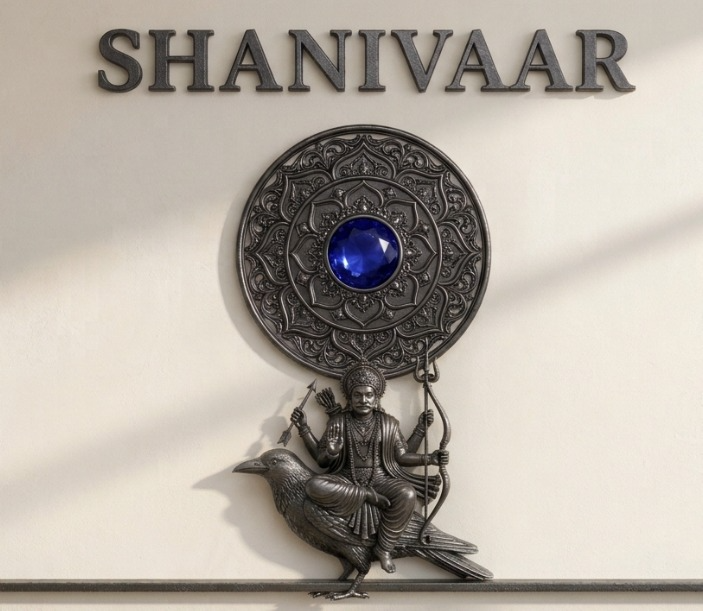
Shanivaar (Saturday) is governed by Shani (Saturn), the cosmic dispenser of justice (Karmaphaladata), discipline, longevity, endurance, and structural permanence. Running from Saturday sunrise to Sunday sunrise, it carries a grounding blend of Daruna / Tikshna (sharp, disciplined) and Vayu (air/movement) energies. In Vastu Shastra—where structural stability, West-zone (Paschim Disha) harmony, and orderly upkeep sustain long-term peace—the classical attributes of Shanivaar govern maintenance, West-zone balance, and Shani-Hanuman protective rituals.
Attribute | Detail |
Vaar | Shanivaar |
Planet (Grah) | Shani (Saturn) |
Adhi Devta (Primary Deity) | Yama (Lord of Dharma & Justice) |
Pratyadhi Devta (Secondary Deity) | Prajapati / Kala Bhairava / Hanuman |
Sangya (Temperament) | Daruna / Tikshna (Sharp, Disciplined & Enduring) + Krura |
Tatva (Element) | Vayu Tatva (Air) |
Guna | Tamasic (Grounding, Structural & Karmac) |
Vastu Disha (Direction) | Paschim Disha (West) |
Vaar Shool Disha (Restricted Direction) | Purva Disha (East) |
Shubh Rang (Auspicious Colour) | Navy Blue, Indigo, Charcoal Grey, Deep Violet, Black |
Shubh Dhatu (Auspicious Metal) | Iron (Loha) / Steel / Blue Sapphire (Neelam) |
Daan (Charity) | Black sesame seeds (kala til), mustard oil (sarson tel), black urad dal, iron utensils, blankets, footwear |
Vastu Principles:
(Read together with Nakshatra, Tithi and overall Muhurt)
What To Do on a Saturday:
Deep Cleaning, Decluttering & Repair Work: Because Shanivaar governs discipline, boundaries, and old karma, Saturday is the best day to clear out broken appliances, rusted iron, cobwebs, and stagnant clutter—especially in the West and Southwest zones.
Boundary Walls, Iron Gates & Structural Maintenance: Working with iron grills, gates, plumbing repairs, or reinforcing the West wall aligns harmoniously with Shani's grounding energy.
Activating & Balancing the West Zone (Paschim Disha): Keep the West section tidy, ensure heavy storage is neatly organized rather than chaotic, and introduce subtle navy-blue or earthy metallic accents to stabilize gains and stability.
Shani, Peepal & Hanuman Worship: Lighting a mustard-oil (sarson tel) lamp under a Peepal tree or before Lord Hanuman on Saturday evening pacifies Shani doshas and shields the home from negative influences.
What To Avoid on a Saturday:
Routine Griha Pravesh (Housewarming): Traditional Vastu texts generally avoid moving into a new home on Saturdays because Daruna/Krura energy can invite delays, heaviness, or unexpected repairs unless specifically prescribed by a knowledgeable astrologer.
Eastward Travel or East-Zone Disruptions (Vaar Shoola): According to Panchang rules, Vaar Shoola lies in the East on Saturdays—avoid starting long journeys toward the East or initiating major demolition or structural changes in the East zone on this day.
Buying Iron, Mustard Oil, Salt, or Leather for Personal Household Use: Customary Panchang tradition avoids purchasing iron goods, mustard oil, black sesame, or brooms on Saturdays for home accumulation, reserving these items strictly for Daan (charity).
Vastu Tips – Quick and Easy
If a home suffers from West Vastu Dosh or Shani-related stagnation (e.g., an extension or cut in the West, a cluttered West storage area, or recurring delays and heaviness), Shanivaar is the ideal day to:
Declutter the West and Southwest corners thoroughly, removing unused electronics, torn shoes, and junk.
Mop the house floors with sea salt water (Samudri Namak) on Saturday morning to clear heavy, stagnant vibrations (avoiding the Pooja area).
Light a sesame-oil or mustard-oil diya near the main entrance threshold on Saturday evening (after sunset) to ward off negativity.
Place a small iron horseshoe (naal) or clean metallic wind chime in the West zone after proper cleansing.
Donate black sesame seeds, black urad dal, mustard oil, warm blankets, or footwear within the first hour after sunrise (Shani Hora) or at sunset to the needy, elderly, or manual laborers.