Ravivaar
रविवार
Governed by Surya and Agni Tattva, Ravivaar carries fixed (Dhruva) and purifying energy. Explore its classical Panchang attributes, property rules, and simple Sunday Vastu remedies to energize the East direction of your home.
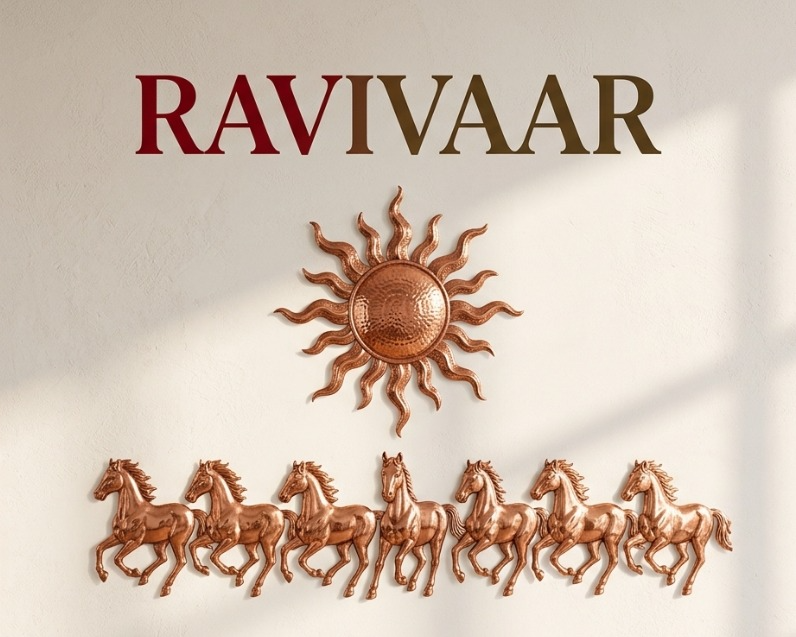
Ravivaar (Sunday) is governed by Surya (the Sun), the cosmic source of vitality, authority, and life force (Prana). Running from Sunday sunrise to Monday sunrise, it carries a distinct blend of Dhruva (fixed, enduring) and Agni (purifying fire) energies. In Vastu Shastra—where natural light and directional harmony shape the well-being of a living space—the classical attributes of Ravivaar govern structural milestones, Purva Disha balance, and sacred fire rituals.
Attribute | Detail |
Vaar | Ravivaar |
Planet (Grah) | |
Adhi Devta (Primary Deity) | Agni (Fire) / Surya |
Pratyadhi Devta (Secondary Deity) | Rudra (Shiva in fierce form) |
Sangya (Temperament) | Sthira / Dhruva (Fixed & Permanent) + Krura (Fierce/Sharp) |
Tatva (Element) | Agni Tatva (Fire) |
Guna | Sattvic |
Vastu Disha (Direction) | Purva Disha (East) |
Vaar Shool Disha (Restricted Direction) | Paschim Disha (West) |
Shubh Rang (Auspicious Colour) | Ruby Red, Saffron, Golden Yellow |
Shubh Dhatu (Auspicious Metal) | Copper / Gold |
Daan (Charity) | Wheat, jaggery (gud), copper vessels, red cloth, red flowers |
Vastu Principles:
(Read together with Nakshatra, Tithi and overall Muhurt)
What To Do on a Sunday:
Laying Foundations (Shilanyas) & Structural Pillars: Because Ravivaar has Dhruva Sangya, laying the foundation stone, erecting main pillars, or starting boundary walls gives the structure long-term stability (provided the Tithi and Nakshatra are favorable).
Activating the East Zone (Purva): Clean the East side of the house, open windows early to let morning sunlight enter, or install a copper Sun emblem on the East wall on a Sunday morning.
Vastu Shanti & Agni-Related Rituals: Performing Havan (fire ritual) or lighting a pure ghee lamp at sunrise to cleanse stagnant energy in an existing home.
Government & Authority Matters: Submitting building plans for municipal approval or handling official property paperwork involving government bodies.
What To Avoid on a Sunday:
Routine Griha Pravesh (Housewarming): Traditional Vastu texts generally avoid moving into a new home on Sundays because Krura energy can create restlessness or ego clashes among family members.
Buying or Selling Residential Property: Unless backed by an exceptionally strong Nakshatra (like Pushya or Rohini), Sunday is usually skipped for signing residential sale deeds or paying token money (Bayana).
Westward Travel or Major West-Zone Shifts (Vaar Shoola): According to Panchang rules, Vaar Shoola lies in the West on Sundays—avoid starting journeys toward the West or initiating major structural changes in the West zone of the house on this day.
Vastu Tips – Quick and Easy
If a home suffers from East Vastu Dosh (e.g., blocked East windows, a toilet or heavy clutter in the East, or lack of natural morning sunlight), Ravivaar is the ideal day to:
Open East-facing curtains/windows during and for 30 minutes after sunrise.
Declutter the East corner (remove broken items, heavy storage, or shoes).
Light a ghee diya in the East direction.
Offer water (Arghya) to the rising Sun using a copper lota mixed with red flowers, allowing the water to fall onto a clean plant (avoid Tulsi).
Donate whole wheat, jaggery (gud), a copper vessel, or red cloth within the first hour after sunrise (Surya Hora) to a needy person, temple, or Gaushala (feeding jaggery and wheat roti to cows).