Punarvasu Nakshatra
पुनर्वसु नक्षत्र
Punarvasu is the seventh Nakshatra in Vedic astrology, ruled by Jupiter and Goddess Aditi, symbolizing renewal, shelter, and returning light. Discover its core astrological features, symbol, four padas, and high suitability for residential purchases, Griha Pravesh, and Vastu restoration.
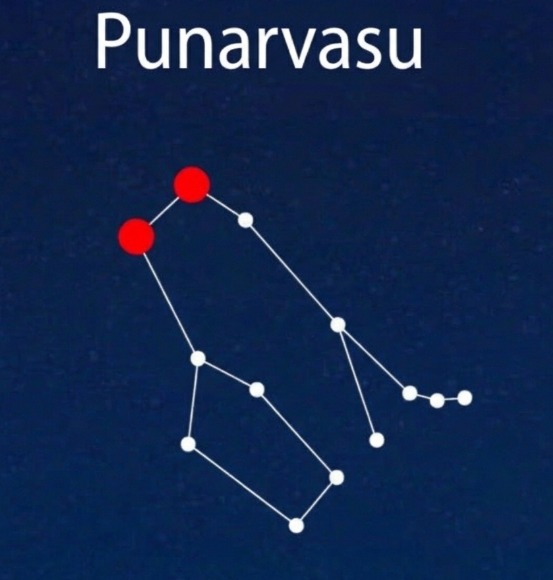
Punarvasu derives its name from Puna (again) and Vasu (light, wealth, or goodness), meaning "the return of the light" or "becoming good again." It is the seventh Nakshatra in the 27-Nakshatra sequence and bridges the signs of Gemini and Cancer, embodying renewal, restoration, abundance, and safe shelter.
The bow and quiver symbolise readiness, protection, focused direction, and the ability to bounce back after setbacks. Consequently, Punarvasu is traditionally associated with replenishment, hospitality, domestic warmth, and auspicious new beginnings.
Nakshatra | |
Nakshatra (Constellation) | Punarvasu |
Nakshatra Grah (Planet) | Guru (Jupiter) |
Symbol | Bow & Quiver of Arrows / House |
No | |
No | |
Nadi | Aadya |
Yoni | Marjara (Cat) |
Gana | Dev |
Aaradhya-Vriksh | Bans (Bamboo) |
Daan | Yellow Clothes / Gold / Urad / Yellow Til |
Devta | Aditi (Mother of the Gods & Cosmic Abundance) |
Tiryakmukha Nakshatra (Horizontal / Forward-Facing) | |
Sulochana (Clear-Eyed Nakshatra) | |
Jala (Water) | |
Chara / Chala (Movable & Dynamic) | |
Core traits | Optimistic, nurturing, resilient, generous, philosophical, adaptable, and focused on renewal, harmony, and restoration |
Nakshatra Rashi | |
Rashi | Gemini (1st, 2nd & 3rd Padas) Cancer (4th Pada) |
Degree | 20°00′ Gemini – 03°20′ Cancer |
Rashi Grah (Planet) | Budh (Mercury) Chandra (Moon) |
Rashi Varna | Shudra (1st, 2nd & 3rd Padas) Brahmin (4th Pada) |
Rashi Vashya | Dwipad / Manav (Gemini) Jalchar (Cancer) |
Rashi Tatva | Vayu (Air) Jala (Water) |
Nakshatra Padas | ||||
Details | First Pada | Second Pada | Third Pada | Fourth Pada |
Pada Rashi | Mesh (Aries) | Vrishab (Taurus) | Mithun (Gemini) | Kark (Cancer) |
Degrees | 20°00' to 23°20' (Gemini) | 23°20' to 26°40' (Gemini) | 26°40' to 00°00' (Gemini) | 00°00' to 03°20' (Cancer) |
Pada Planet | Mangal (Mars) | Shukra (Venus) | Budh (Mercury) | Chandra (Moon) |
Letter (English) | Ke | Ko | Ha | Hi |
Letter (Hindi) | के | को | हा / ह | ही |
Traits | Adventurous, enthusiastic, pioneering, and action-oriented | Grounded, artistic, comfort-loving, and financially prudent | Communicative, witty, curious, and intellectually agile | Nurturing, intuitive, deeply domestic, and emotionally protective |
Property and Vastu Suitability under Punarvasu Nakshatra
Residential Purchase & Registration (Highly Favorable): Governed by Goddess Aditi (the cosmic mother) and Jupiter, Punarvasu is widely praised in Vastu for buying family homes, apartments, and properties meant to feel like a true sanctuary.
Residential Griha Pravesh & Re-occupation (Highly Favorable): Meaning "return of the light," it is especially auspicious for moving into a newly built home or re-entering a house after extensive repairs or a long absence.
Renovation, Expansion & Vastu Remedies (Highly Favorable): Its restorative energy supports rebuilding, adding extra rooms, and performing Vastu corrections to bring prosperity and positivity back into a space.
Commercial & Travel-Related Spaces (Favorable): Because Punarvasu is a Chara (movable) nakshatra, it works well for inaugurating hotels, guest houses, transport hubs, educational institutes, and dynamic retail spaces.
Demolition & Permanent Closure (Not Recommended): As a star of renewal, replenishment, and return, it is avoided when permanently tearing down buildings or shutting down operations.
Punarvasu Nakshatra is best utilised in Vastu for welcoming light, abundance, and warmth into a home, restoring tired spaces, and initiating joyful domestic or hospitality ventures.