Pitra Devta
पितृ
Representing the energy of the ancestors, lineage, and structural roots, Pitra devta anchors the family’s foundation, directly regulating long-term stability, familial bonds, skill inheritance, and the overarching protection of the household.
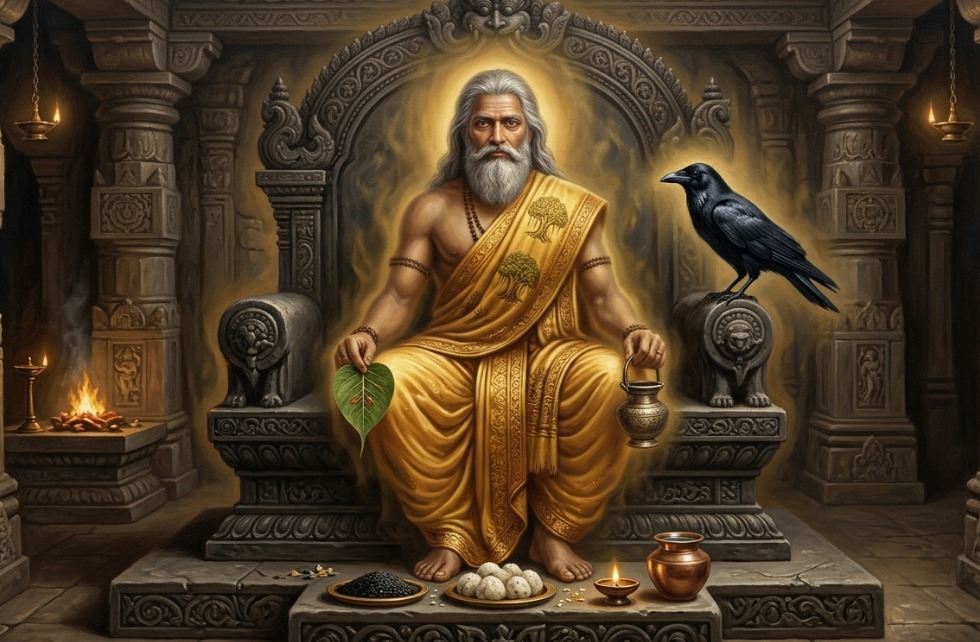
Pitra (traditionally representing the ancestral souls or Pitrus) is the Vedic deity field associated with ancestral blessings, structural stability, relationship bonds, and generational continuity. Acting as the deep roots of a family tree, this energy field regulates how effectively family members stay connected, honor their heritage, pass down traditional skills, and maintain a secure foothold in life and business.
Pada in Vastu Purush Mandal
Pitra resides as the first energy field (pada) along the Pashchim-leaning perimeter of the Nairitya Kon quadrant. He sits directly next to Mriga (the 8th pada / S8) and marks the foundational entry point into the Nairitya Kon zone, serving as the bridge toward Dauvarik (the 2nd pada / W2).
What does this Pada do
Pitra provides the heavy, stabilizing energy required to keep families united, secure ancestral wealth, anchor marriages, and ensure that children inherit the wisdom, core values, and talents of their lineage.
Probable Signs of an Imbalance
If this Pada is blocked or disturbed by open boring systems, fire elements, or toilets, the following issues often manifest in the household:
Instability and Family Disputes: Serious rifts develop among family members, leading to property disputes, marital disharmony, frequent divorces, or an inability to find suitable life partners.
Generational Blockages: The family experiences a sudden halt in lineage growth (childbirth issues) or faces a total drain of inherited wealth and business continuity.
Balancing and Optimization
To maintain a strong, anchoring flow of Pitra's stabilizing energy, this crucial W1 zone must be heavily balanced:
Ideal for Ancestral Remembrance: This is the most auspicious zone to place neatly framed photos of departed ancestors (facing North or East). It is also highly favorable for the master bedroom to ensure grounding stability.
Strict Prohibition of Fire and Water Drainage: Under no circumstances should kitchens, open fireplaces, washing machines, or toilets be built here, as they burn away or flush down the very roots of your family’s stability.
Strengthen with Heavy Earth Tones: Keep this zone heavy, solid, and closed. Decorate using deep golden yellow, solid beige, or heavy wooden furniture to support the core Earth element (Prithvi Tattva) of the South-West.
Naam Mantra
ॐ भूर्भुवः स्वः पितृभ्यः नमः॥
Naivedya (Offerings)
Black sesame rice balls (तिल पिण्ड), Pure Ghee (शुद्ध घृत) and Water offered in a copper vessel (तर्पण जल)
Modern Vastu Pada and Degrees
W1
Angular Degree from Centre: 225.0° to 236.25°