Panchak Nakshatra
पंचक नक्षत्र
Panchak is a monthly 5-day period in Vedic astrology occurring when the Moon transits through the last five Nakshatras in Aquarius and Pisces. Depending on its starting weekday, it carries different astrological effects, requiring specific precautions while permitting spiritual practices and select property tasks.
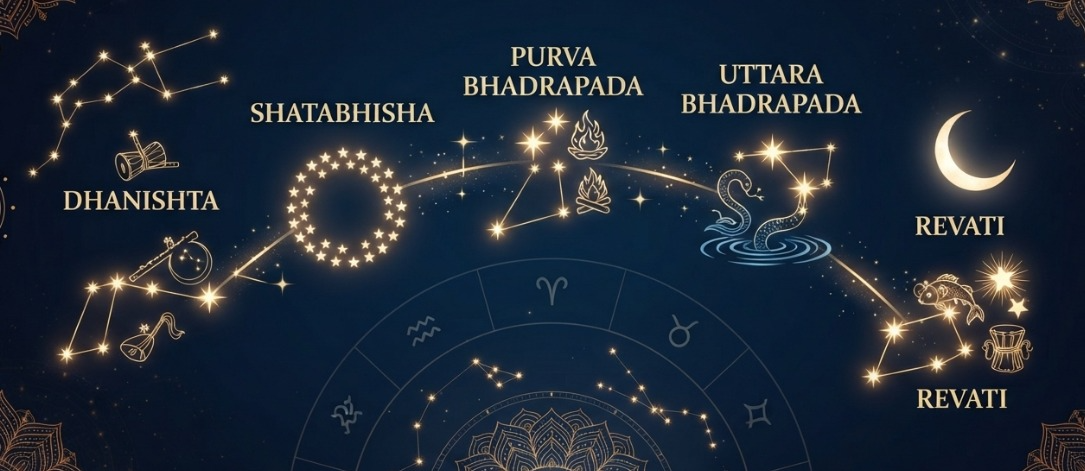
Panchak is a 5-day inauspicious period in Vedic astrology that occurs every month when the Moon transits through the final five Nakshatras in the zodiac signs of Aquarius (Kumbha) and Pisces (Meen).
The Five Panchak Nakshatras
The period spans these five specific Nakshatras:
Dhanishta (starts from 2nd charan)
Shatabhisha
Purva Bhadrapada
Uttara Bhadrapada
Revati
Classification Based on Weekday
Depending on which day of the week the Panchak starts, it takes on a specific name and effect:
Rog Panchak (Sunday): Brings health risks and physical illness. So avoid any new health or fitness regime.
Raj Panchak (Monday): Associated with government or administrative troubles/matters. However, purchase of property or legal work related to properties can be initiated.
Agni Panchak (Tuesday): Carries a high risk of fire hazards or construction-related accidents.
Chor Panchak (Friday): Warns of financial loss, fraud, or theft.
Mrityu Panchak (Saturday): Regarded as a period of extreme misfortune or danger. Adopt caution.
Wednesday and Friday: Generally safe but check shubh muhurt for only necessary tasks.
What can be done during Panchak
Utilise Raj Panchak: Purchase new property or complete legal work.
Spirituality: Focus on spirituality related work.
What to avoid during Panchak
Cremations: Performing last rites is traditionally avoided or requires specific peace rituals to prevent repeat occurrences in the family.
Southern Travel: Traveling in the south (Yamraj’s direction) is restricted.
Construction & Woodwork: Laying roof thatch, building a house foundation, or collecting wood, grass, and fuel are prohibited.
Making Beds/Cots: Weaving or building a new bed is considered inauspicious.
Major Auspicious Events: Weddings, housewarmings, and new business launches are generally skipped