Nakshatra Tatva
नक्षत्र तत्व
Nakshatra Tatva categorizes the 27 lunar constellations into the five elements of nature—Earth, Water, Fire, Air, and Space. Aligning property purchases and construction phases with the right elemental Nakshatra ensures Vastu harmony and long-term stability.
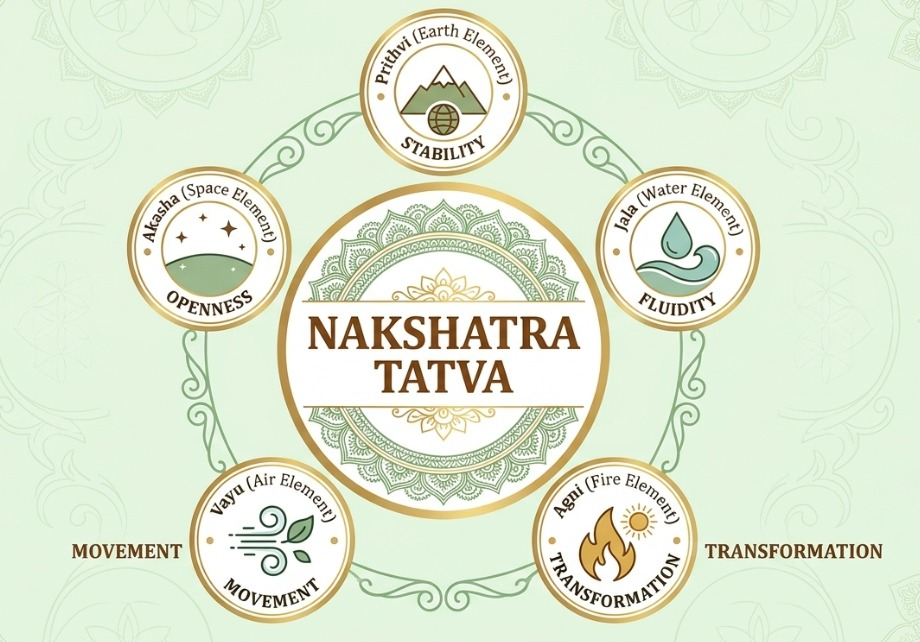
In Vedic astrology (Muhurat Shastra) and Vastu Shastra, Nakshatra Tatva classifies the 27 nakshatra into the five fundamental elements of nature (Pancha Mahabhuta): Earth, Water, Fire, Air, and Space.
Every Nakshatra carries the distinct energetic signature of one element. Vastu experts align real estate milestones, construction phases, and daily activities with a day's Nakshatra Tatva to create lasting balance and prosperity.
The 5 Types of Nakshatra Tatva
1) Prithvi Tatva (Earth Element)
Nakshatras in this group: Ashwini, Bharani, Krittika, Rohini, and Mrigashira.
Core Energy: Stability, grounding, physical strength, and permanence.
Best Activities & Vastu Uses: This is the strongest element for real estate. It is ideal for buying land, registering property, performing Bhoomi Pujan, laying building foundations, and making long-term investments.
2) Jala Tatva (Water Element)
Nakshatras in this group: Ardra, Punarvasu, Pushya, Ashlesha, Magha, and Purva Phalguni.
Core Energy: Fluidity, nourishment, flow, and emotional connection.
Best Activities & Vastu Uses: Ideal for water-related Vastu installations, such as drilling borewells, digging wells, placing underground water tanks in the Northeast, and building swimming pools or gardens.
3) Agni Tatva (Fire Element)
Nakshatras in this group: Uttara Phalguni, Hasta, Chitra, Swati, Vishakha, and Anuradha.
Core Energy: Transformation, heat, illumination, and action.
Best Activities & Vastu Uses: Best suited for setting up the kitchen in the Southeast, installing electrical panels, lighting the stove during Griha Pravesh, and launching commercial factories. Avoid these stars for water boring or damp-proofing work.
4) Vayu Tatva (Air Element)
Nakshatras in this group: Jyeshtha, Moola, Purva Ashadha, Uttara Ashadha, and Shravana.
Core Energy: Movement, circulation, expansion, and lightness.
Best Activities & Vastu Uses: Great for planning ventilation, installing doors and windows, setting up balconies, and executing quick property resales or rentals. Avoid buying a permanent family home if you want zero relocation.
5) Akasha Tatva (Space / Ether Element)
Nakshatras in this group: Dhanishta, Shatabhisha, Purva Bhadrapada, Uttara Bhadrapada, and Revati.
Core Energy: Openness, sound, subtle vibration, and spiritual harmony.
Best Activities & Vastu Uses: Governs the Brahmasthan (center of the home), open courtyards, and prayer rooms. Uttara Bhadrapada and Revati bring spaciousness and peace, though their overlap with Panchak requires checking weekday rules.
Why Nakshatra Tatva Matters in Property & Vastu
Balances Home Energy: Matching a specific construction task with its natural element prevents energetic clashes inside the structure.
Protects Long-Term Ownership: Grounding major property purchases in Prithvi (Earth) stars ensures stability and reduces the risk of sudden relocation.
Enhances Vastu Zoning: Performing zone-specific work—such as Southeast kitchen setups on Agni days or Northeast water work on Jala days—amplifies positive Vastu results.