Nakshatra Mukh
नक्षत्र मुख
Nakshatra Mukh classifies the 27 lunar constellations into downward, upward, and horizontal orientations in Vedic astrology. Aligning construction and property milestones with the right Mukh ensures smooth progress and Vastu harmony.
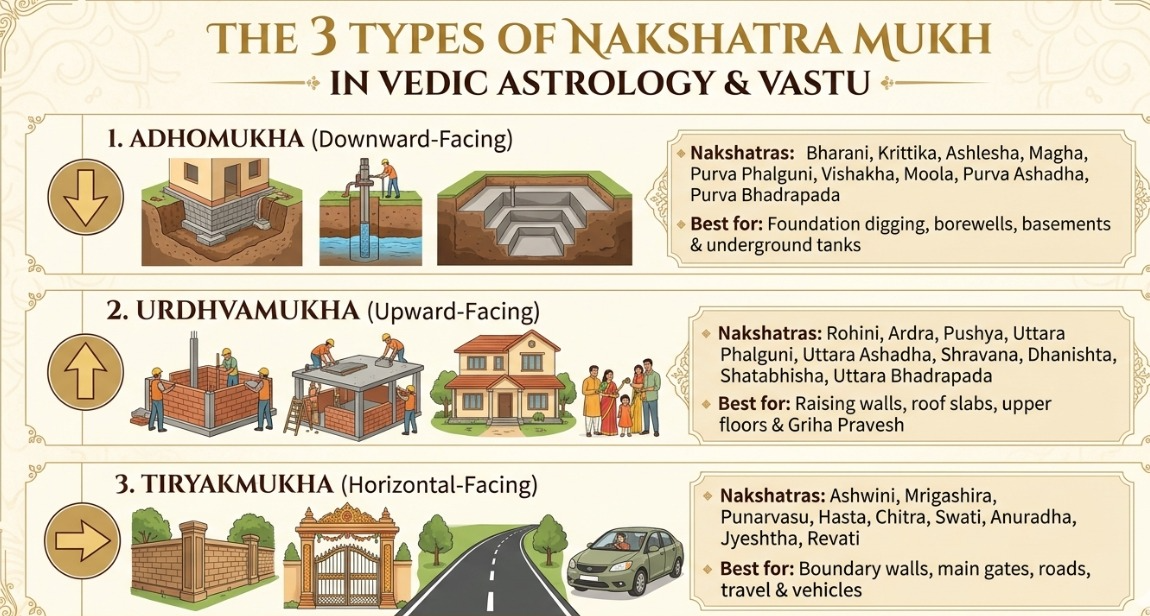
In Vedic astrology (Muhurat Shastra), Nakshatra Mukh refers to the directional orientation or "facing" of a lunar constellation. Every one of the 27 Nakshatras points either downward, upward, or horizontally. You should evaluate a day’s Nakshatra Mukh to ensure the natural energy of the cosmos aligns with the physical direction of your work—especially during construction, farming, and property development.
The 3 Types of Nakshatra Mukh
1) Adhomukha Nakshatra (Downward-Facing)
Nakshatras in this group: Bharani, Krittika, Ashlesha, Magha, Purva Phalguni, Vishakha, Moola, Purva Ashadha, and Purva Bhadrapada.
Core Energy: These nine constellations direct energy downward into the earth.
Best Activities & Vastu Uses: They are ideal for digging house foundations, excavating basements, drilling borewells, building underground water tanks, mining, and planting root crops. Avoid raising walls or laying roofs on these days.
2) Urdhvamukha Nakshatra (Upward-Facing)
Nakshatras in this group: Rohini, Ardra, Pushya, Uttara Phalguni, Uttara Ashadha, Shravana, Dhanishta, Shatabhisha, and Uttara Bhadrapada.
Core Energy: These nine constellations carry an uplifting, ascending energy toward the sky.
Best Activities & Vastu Uses: They are essential for raising walls, erecting pillars, laying the roof slab (chhat), constructing upper floors, hoisting flags, and performing Griha Pravesh (housewarming) for long-term growth.
3) Tiryakmukha Nakshatra (Horizontal / Forward-Facing)
Nakshatras in this group: Ashwini, Mrigashira, Punarvasu, Hasta, Chitra, Swati, Anuradha, Jyeshtha, and Revati.
Core Energy: These nine constellations move energy outward and forward across a level plane.
Best Activities & Vastu Uses: They are best suited for building boundary walls, installing main gates and doors, laying roads or driveways, fencing land, traveling, and buying vehicles.
Why Nakshatra Mukh Matters in Property & Vastu
Prevents Structural Setbacks: Aligning downward tasks (like excavation) with Adhomukha stars and upward tasks (like roofing) with Urdhvamukha stars helps construction progress smoothly without delays.
Enhances Vastu Harmony: Matching the directional flow of the Nakshatra with the physical phase of building grounds the structure and promotes peace for future residents.
Simple Rule of Thumb: If your work goes into the ground, pick Adhomukha. If it rises above the ground, pick Urdhvamukha. If it moves across the ground, pick Tiryakmukha.