Mangalvaar
मंगलवार
Governed by Mangal (Mars) and Agni Tattva, Mangalvaar carries assertive (Ugra) and earth-connected energy. Explore its classical Panchang attributes, land and property rules, and simple Tuesday Vastu remedies to strengthen the South direction of your home.
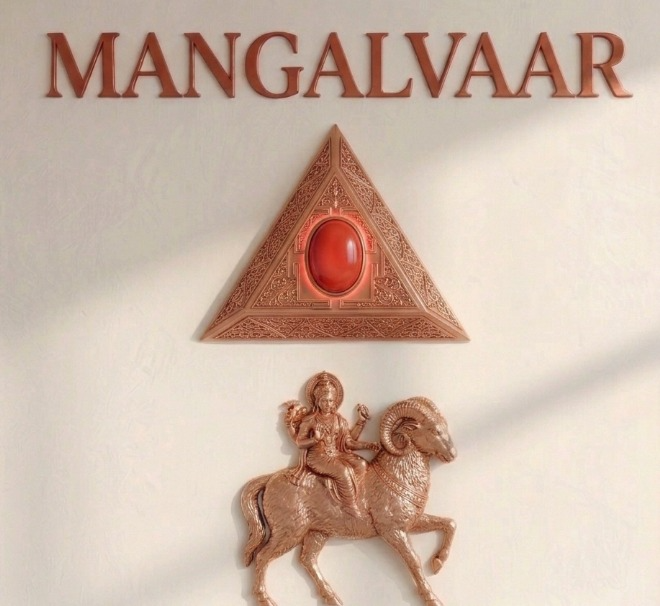
Mangalvaar (Tuesday) is governed by Mangal (Mars—also known as Kuja or Bhauma, the son of Bhumi Devi/Earth), the cosmic force of courage, physical strength, land, and decisive action. Running from Tuesday sunrise to Wednesday sunrise, it carries an intense blend of Ugra (fierce, assertive) and Agni (dynamic fire) energies. In Vastu Shastra—where Bhumi (land), structural boundaries, and fire-zone balance anchor a property—the classical attributes of Mangalvaar govern land acquisition, Dakshin Disha balance, and protective rituals.
Attribute | Detail |
Vaar | Mangalvaar |
Planet (Grah) | Mangal (Mars) |
Adhi Devta (Primary Deity) | Bhumi (Earth) / Skanda (Kartikeya) |
Pratyadhi Devta (Secondary Deity) | Kshetrapala (Guardian Deity of Land) / Hanuman |
Sangya (Temperament) | Ugra (Fierce & Assertive) + Krura (Sharp) |
Tatva (Element) | Agni Tatva (Fire) |
Guna | Tamasic (Dynamic/Inertial Force) |
Vastu Disha (Direction) | Dakshin Disha (South) |
Vaar Shool Disha (Restricted Direction) | Uttar Disha (North) |
Shubh Rang (Auspicious Colour) | Vermilion (Sindoori Red), Coral Red, Terracotta, Saffron |
Shubh Dhatu (Auspicious Metal) | Copper / Red Coral (Moonga) |
Daan (Charity) | Red lentils (masoor dal), jaggery (gud), copper, red cloth, red flowers, wheat |
Vastu Principles:
(Read together with Nakshatra, Tithi and overall Muhurt)
What To Do on a Tuesday:
Land Inspection, Boundary Walls & Compound Demarcation: Because Mangal is Bhumiputra (Son of the Earth), Tuesday is highly supportive for inspecting plots, verifying land boundaries, constructing compound walls, or installing heavy main gates (especially South-facing gates).
Kitchen & Fire-Element Setup: Setting up a gas stove, chimney, electrical main panel, or inverter in the Agneya Kon (Southeast) zone aligns naturally with Mangalvaar's Agni Tatva.
Activating & Balancing the South Zone (Dakshin): Clean the South section of the home, check for wall dampness or cracks, and place earthy terracotta elements or a red/coral accent in the South to stabilize grounding energy.
Hanuman & Kshetrapala Worship (Bhumi Pujan Prep): Lighting a jasmine-oil (chameli) or ghee diya and reciting Hanuman Chalisa clears lingering Vastu doshas, negative stagnant energy, and property-related disputes.
What To Avoid on a Tuesday:
Griha Pravesh (Housewarming) & Peaceful Celebrations: Because Mangalvaar carries Ugra and Krura Sangya, Vastu texts strictly avoid moving into a new home on Tuesdays, as fiery energy can trigger domestic friction, accidents, or restlessness.
Northward Travel or North-Zone Disruptions (Vaar Shoola): According to Panchang rules, Vaar Shoola lies in the North on Tuesdays—avoid starting long journeys toward the North or initiating major demolition or heavy storage shifts in the Uttar Disha on this day.
Lending Money or Taking New Property Loans: Traditional Panchang wisdom advises against borrowing money or signing new home-loan debt agreements on Tuesdays, as Mangal-ruled debts tend to linger or cause financial strain.
Vastu Tips – Quick and Easy
If a home suffers from South Vastu Dosh (e.g., an open or low South boundary, a water tank/borewell in the South, or frequent quarrels and sluggishness), Mangalvaar is the ideal day to:
Keep the South and Southwest walls heavier and slightly higher than the North and Northeast boundaries.
Remove any broken electronics, rusted iron tools, or unused sharp objects stored in the South or Southeast corners.
Light a chameli-oil (jasmine) or ghee diya in front of Lord Hanuman on Tuesday morning or evening.
Place a small piece of natural Red Coral (Moonga) or a copper pyramid in the South zone after proper cleansing.
Donate red masoor dal, jaggery (gud), copper utensils, or red cloth within the first hour after sunrise (Mangal Hora) to a needy person, temple, or feed jaggery and roasted gram (chana) to monkeys or cows.