Budhvaar
बुधवार
Governed by Budh (Mercury) and Prithvi Tattva, Budhvaar carries adaptable (Mishra) and intellect-boosting energy. Explore its classical Panchang attributes, property rules, and simple Wednesday Vastu remedies to energize the North direction of your home.
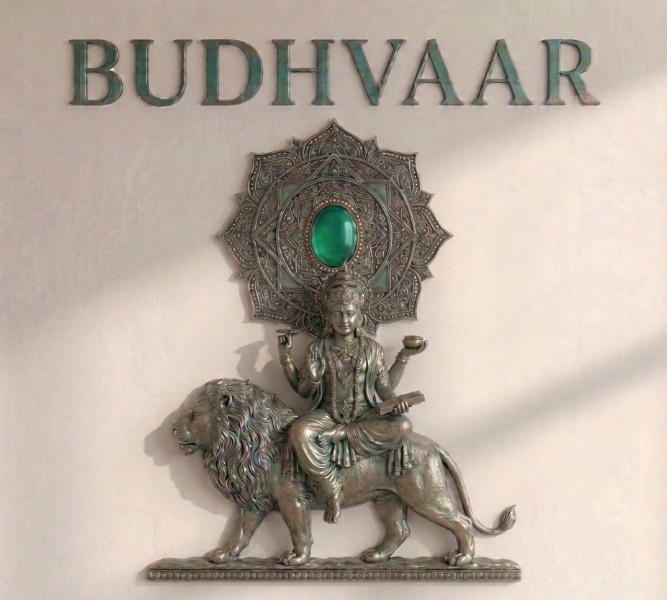
Budhvaar (Wednesday) is governed by Budh (Mercury), the cosmic prince of intellect (Buddhi), communication, trade, adaptability, and discernment. Running from Wednesday sunrise to Thursday sunrise, it carries a balanced blend of Mishra (mixed, adaptable) and Prithvi (grounding earth) energies. In Vastu Shastra—where clear energy flow, financial prosperity, and structured workspaces shape the growth of a home or office—the classical attributes of Budhvaar govern North-zone (Uttar Disha) activation, study and business setups, and Ganesh-Vishnu rituals.
Attribute | Detail |
Vaar | Budhvaar |
Planet (Grah) | Budh (Mercury) |
Adhi Devta (Primary Deity) | Vishnu (Narayana) |
Pratyadhi Devta (Secondary Deity) | Narayana / Ganesha (Remover of Obstacles) |
Sangya (Temperament) | Mishra / Sadharana (Mixed & Adaptable) + Saumya (Benefic/Gentle) |
Tatva (Element) | Prithvi Tatva (Earth) |
Guna | Rajasic (Active, Analytical & Commercial) |
Vastu Disha (Direction) | Uttar Disha (North) |
Vaar Shool Disha (Restricted Direction) | Uttar Disha (North) (Even though the Vastu Disha for Budhvaar is Uttar Disha, avoid starting long-distance travel toward the North) |
Shubh Rang (Auspicious Colour) | Emerald Green, Leaf Green, Parrot Green, Pastel Mint |
Shubh Dhatu (Auspicious Metal) | Bronze (Kansa) / Brass / Emerald (Panna) |
Daan (Charity) | Whole green moong dal, green vegetables, spinach, green cloth, bronze utensils, books/stationery |
Vastu Principles:
(Read together with Nakshatra, Tithi and overall Muhurt)
What To Do on a Wednesday:
Setting Up Home Offices, Study Rooms & Cash Lockers: Because Budh rules intellect, accounting, and commerce, Wednesday is ideal for arranging a work desk, setting up a child's study table (facing North or East), or placing a safe/locker in the North (Kuber) zone.
Griha Pravesh & Commercial Property Openings: Backed by Saumya (gentle) and Prithvi (grounding) energies, Budhvaar is considered highly auspicious for moving into a new home, inaugurating a shop or office, and signing business or rental agreements.
Activating the North Zone (Uttar Disha) & Indoor Greenery: Clean the North windows, remove heavy clutter blocking the North wall, and introduce healthy, broad-leafed indoor plants (such as money plants or bamboo) in the North or East zones.
Ganesha & Vishnu Worship: Offering Durva grass to Lord Ganesha or lighting a ghee lamp before Lord Vishnu and Tulsi on Wednesday morning sharpens clarity, removes communication bottlenecks, and invites steady financial flow.
What To Avoid on a Wednesday:
Northward Travel or Major North-Zone Disruptions (Vaar Shoola): According to classical Panchang rules, Vaar Shoola lies in the North on Wednesdays—avoid starting long journeys toward the North or initiating heavy demolition or structural changes in the North zone on this day.
Neglecting Indoor Plants or Keeping Dried/Thorny Flora: Allowing plants in the North or Northeast to wilt or keeping cactus/thorny plants indoors weakens Budh energy and disrupts mental focus.
Harsh Speech, Gossip & Unverified Financial Risks: Because Budh governs speech (Vaani) and trade, impulsive arguments or speculative financial decisions made on a Wednesday often create long-term misunderstandings.
Vastu Tips – Quick and Easy
If a home suffers from North Vastu Dosh (e.g., a blocked North entrance, heavy storage or toilet in the North, or career and cash-flow stagnation), Budhvaar is the ideal day to:
Declutter the North zone completely so light and air circulate freely.
Place a clean bronze (kansa) or green ceramic bowl with fresh water and green leaves in the North or Northeast corner.
Keep a healthy, well-watered green plant (avoid thorny plants) near the North window or living area.
Offer 21 blades of fresh Durva grass to Lord Ganesha on Wednesday morning while chanting "Om Gam Ganapataye Namah".
Donate whole green moong dal, fresh green fodder (palak/grass) to cows at a Gaushala, or notebooks/stationery to students within the first hour after sunrise (Budh Hora).