Bhujang Devta
भुजंग
Representing the celestial serpent forces of cellular healing and regeneration, Bhujang devta directly regulates physical recovery, medicinal effectiveness, immune resilience, and the preservation of health within the household.
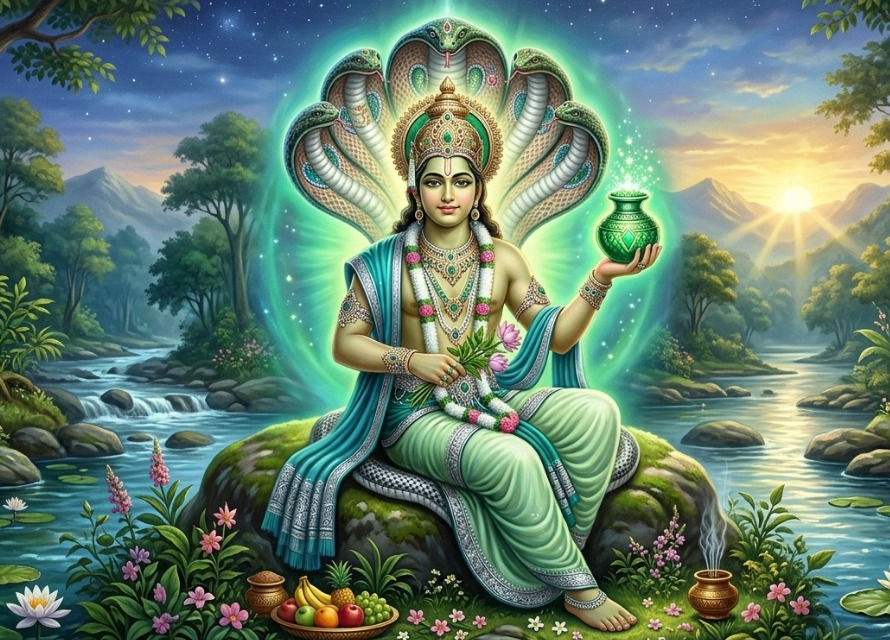
Bhujang is the Vedic devta associated with physical healing, cellular rejuvenation, medicine efficacy, and the shedding of chronic ailments. Positioned prominently in the North-North-East health sector, this energy field controls how rapidly the body recovers from illness and how effectively medicines or therapies work for the occupants.
Pada in Vastu Purush Mandal
Bhujang resides as the sixth energy field (pada) along the Uttar disha outer perimeter. He sits directly next to Soma (the 5th pada / N5) and transitions toward Aditi (the 7th pada / N7), anchoring the primary healing zone of the North-North-East quadrant.
What does this Pada do
Bhujang provides the regenerative, restorative energy required to accelerate physical recovery, ensure accurate medical diagnoses, maximize the healing impact of medications, and maintain long-term vitality.
Probable Signs of an Imbalance
If this Pada is blocked or disturbed by fire elements, heavy earth clutter, or toilets, the following issues often manifest in the household:
Ineffective Medication: Family members suffer from prolonged recovery times, where prescribed medicines fail to work or lead to unexpected side effects.
Recurring Health Issues: Occupants experience chronic low immunity, frequent infections, or lingering ailments that return repeatedly despite treatment.
Balancing and Optimization
To maintain a strong, restorative flow of Bhujang's healing energy, this crucial N6 zone must be carefully managed:
Ideal for Medicines and Recovery: This is the most auspicious zone in the entire home to store daily medicines, first-aid kits, and health supplements, or to place a recovery room for convalescing family members.
Strict Prohibition of Fire and Heavy Earth: Keep kitchens, open stoves, bright red accents, and heavy stone clutter completely out of this zone, as fire and heavy earth disrupt the cool, regenerative water element of the North-North-East.
Enhance with Fresh Water and Healing Hues: Decorate this area using soft pastel green, light sea-blue, or clean off-white tones, keeping the space bright, hygienic, and clutter-free.
Naam Mantra
ॐ भूर्भुवः स्वः भुजगाय नमः॥
Naivedya (Offerings)
Raw cow milk (गोदुग्ध), Parched paddy or Kheel (लाजा) and Fresh healing herbs or Tulsi leaves (तुलसी पत्र)
Modern Vastu Pada and Degrees
N6
Angular Degree from Centre: 11.25° to 22.5°