Bharani Nakshatra
भरणी नक्षत्र
Bharani is the second Nakshatra in Vedic astrology, symbolizing nourishment, endurance, and transformation. Discover its core astrological features, four padas, and practical suitability for underground excavation, agricultural land, demolition, and residential property from a Vastu perspective.
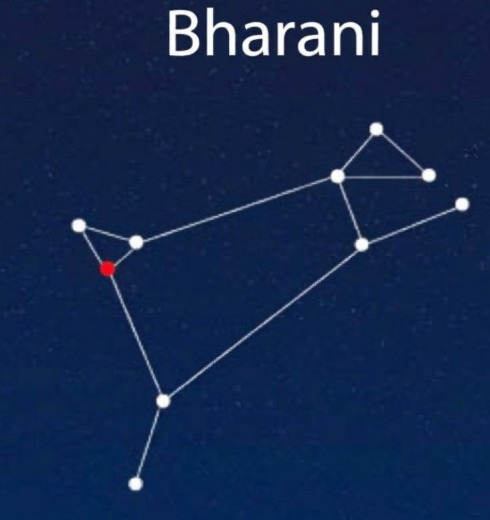
Bharani derives its name from the root Bhri, meaning to bear, nurture, or sustain. It is the second Nakshatra in the 27-Nakshatra sequence and represents the power of creation, gestation, and transformation.
The Yoni (female reproductive organ) symbolises fertility, creative incubation, birth, and the containment of life force. Consequently, Bharani is traditionally associated with nourishment, discipline, endurance, and deep transformative change.
Nakshatra | |
Nakshatra (Constellation) | Bharani |
Nakshatra Grah (Planet) | Shukra (Venus) |
Symbol | Yoni (Womb) |
No | |
No | |
Nadi | Madhya |
Yoni | Gaja (Elephant) |
Gana | Manushya |
Aaradhya-Vriksh | Amla (Indian Gooseberry) |
Daan | Shwet-vastra |
Devta | Yama (God of Dharma & Restraint) |
Adhomukha Nakshatra (Downward-Facing) | |
Madhya / Kana Lochan (Medium / One-Eyed Nakshatra) | |
Prithvi (Earth) | |
Ugra / Krura (Fierce & Aggressive) | |
Core traits | Determined, creative, disciplined, enduring, protective, and capable of handling major responsibilities and transformations |
Nakshatra Rashi | |
Rashi | Mesh (Aries) |
Degree | 13°20′ – 26°40′ in Aries |
Rashi Grah (Planet) | Mangal (Mars) |
Rashi Varna | Kshatriya |
Rashi Vashya | Chatushpad |
Rashi Tatva | Agni (Fire) |
Nakshatra Padas | ||||
Details | First Pada | Second Pada | Third Pada | Fourth Pada |
Pada Rashi | Simha (Leo) | Kanya (Virgo) | Tula (Libra) | Vrishchik (Scorpio) |
Degrees | 13°20' to 16°40' | 16°40' to 20°00' | 20°00' to 23°20' | 23°20' to 26°40' |
Pada Planet | Surya (Sun) | Budh (Mercury) | Shukra (Venus) | Mangal (Mars) |
Letter (English) | Lee | Lu | Le | Lo |
Letter (Hindi) | ली | लू | ले | लो |
Traits | Creative, ambitious, authoritative, and expressive | Practical, analytical, hardworking, and detail-oriented | Artistic, balanced, relationship-focused, and luxury-loving | Intense, transformative, secretive, and deeply resilient |
Property and Vastu Suitability under Bharani Nakshatra
Underground Work & Excavation (Highly Favorable): Supported by Prithvi (Earth) Tatva and Adhomukh (downward-facing) orientation, making it ideal for digging wells, borewells, basements, foundations, and underground water tanks.
Agricultural & Farmhouse Land (Favorable): Aligns with Bharani's fertile, nurturing energy and Venus rulership, supporting orchards, farming land, and horticultural projects.
Demolition & Clearing Old Structures (Favorable): Its Ugra (fierce) nature and connection to Lord Yama make it suitable for demolishing dilapidated structures or clearing heavy clutter before rebuilding.
Residential & Commercial Purchase (Not Recommended): Due to its Ugra (intense/fierce) sangya, traditional Vastu Muhurta avoids purchasing new homes or offices under Bharani to prevent extreme responsibilities or disputes.
Residential Griha Pravesh (Avoid): Fierce nakshatras lack the gentle, harmonious energy required for peacefully entering a new residence.
Bharani Nakshatra is best harnessed in Vastu for deep excavation, agricultural growth, and clearing away the old to make room for transformation rather than anchoring peaceful residential beginnings.