Aryama Devta
अर्यमा
Representing one of the twelve supreme Adityas and the Vedic lord of hospitality, ancestral lineage, and social alliances, this foundational inner energy field directly regulates meaningful networking, business partnerships, marriage prospects, and social harmony within the household.
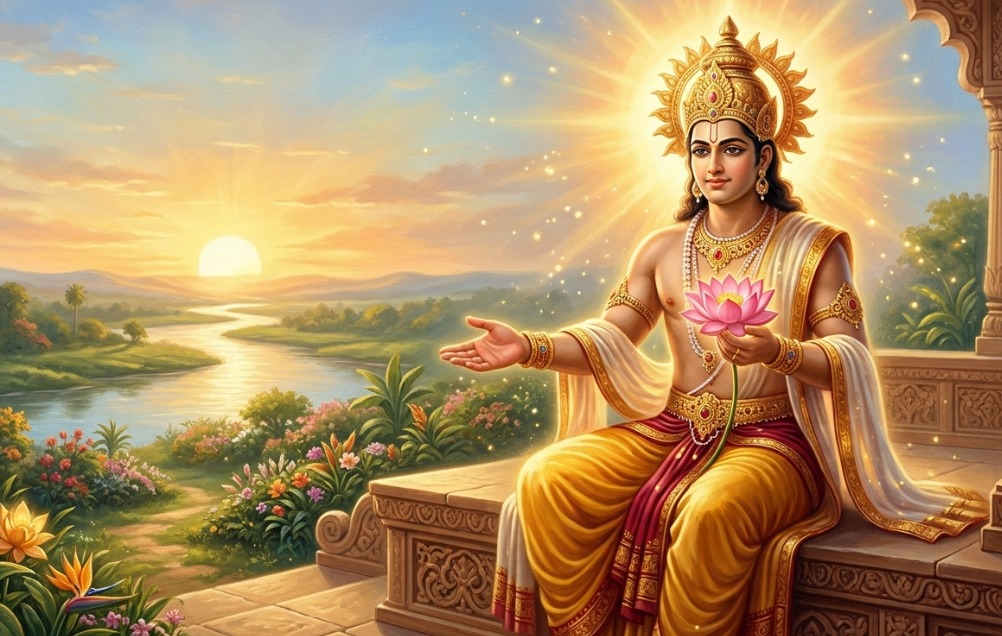
Aryama (traditionally revered as the solar deity of chivalry, noble contracts, and social integration) is the Vedic devta associated with human connections, public reputation, and mutual trust. Positioned immediately East of the central Brahmasthan, this energy field acts as the magnetic bridge that connects the household to influential mentors, supportive communities, and prosperous alliances.
Pada in Vastu Purush Mandala
Aryama resides in the inner ring (Antahpada) directly bordering the central Brahmasthan on the Purva disha. In a 9×9 (81-pada) Vastu Purush Mandal, he occupies the three central padas immediately East of Brahma, flanked by Apaha / Apavatsa toward the Ishanya Kon and Savita / Savitra toward the Agneya Kon, while bordering Jayant (E3), Mahendra (E4), and Surya (E5) on his outer edge. He is the inner devta in Purva disha.
What does this Pada do
Aryama provides the connective, harmonious energy required to build lasting friendships, attract high-value business collaborations, finalize auspicious marriage alliances, and maintain high moral standing in society.
Probable Signs of an Imbalance
If this inner Pada is blocked or disturbed by heavy storage, toilets, staircases, or clutter, the following issues often manifest in the household:
Social Isolation and Broken Alliances: Family members experience sudden misunderstandings with business partners, struggle to find suitable marriage matches, or feel disconnected from helpful social circles.
Loss of Reputation: Occupants face unfair criticism, broken promises from associates, and difficulty gaining recognition despite strong efforts.
Balancing and Optimization
To maintain a bright, welcoming flow of Aryama's connective energy, this crucial Eastern inner zone must be carefully managed:
Keep the Inner East Open and Welcoming: As an inner pada adjacent to the Brahmasthan, keep this area airy, uncluttered, and ideal for family gatherings or open living spaces.
Strict Prohibition of Toilets and Heavy Clutter: Never construct toilets, septic tanks, or heavy dark storage walls in this inner Eastern zone, as waste and stagnation block social goodwill and family growth.
Enhance with Warm Solar and Air Hues: Decorate this space using clean off-white, soft cream, light pastel green, or gentle golden-yellow shades, maximizing morning sunlight and natural ventilation.
Naam Mantra
ॐ भूर्भुवः स्वः अर्यम्णे नमः॥
Naivedya (Offerings)
Sweetened wheat pudding or Halwa (हलवा), Jaggery with roasted sesame (तिल-गुड़) and Pure cow ghee sweets (शुद्ध घृत मिष्ठान)
Modern Vastu Pada and Degrees
Inner East Zone (Antahpada – East of Brahmasthan)
Angular Degree from Centre: 45.0° to 135.0° (centered along the 90.0° East axis in the inner ring)