Apaha Devta
आपः
Representing the pure, sacred cosmic waters (Apah), this vital inner energy field directly regulates immunity, healing, mental clarity, and the purification of obstacles, acting as the primary life-sustaining reservoir of the home
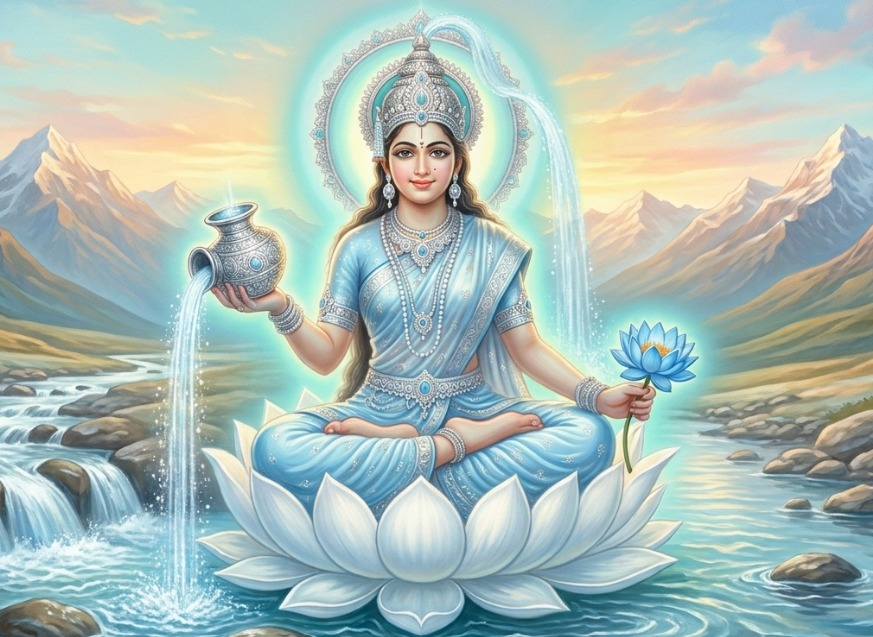
Apaha (traditionally revered as the divine personification of celestial waters and restorative life force) is the Vedic devta associated with cleansing, emotional renewal, healing vitality, and spiritual purity. Positioned in the inner Ishanya Kon right next to the central Brahmasthan, this energy field distributes nourishing, life-giving energy across the entire structure.
Pada in Vastu Purush Mandal
Apaha resides in the inner ring (Antahpada) at the Ishanya Kon vertex of the central Brahmasthan. In a 9×9 (81-pada) Vastu Purush Mandal, he occupies the inner Ishanya diagonal pada directly bordering Brahma, paired closely with Apavatsa (who sits immediately adjacent to him toward the outer North-East corner), and flanked by Prithvidhar in Paschim disha and Aryama to the Dakshin disha.
What does this Pada do
Apaha provides the soothing, purifying energy required to boost physical immunity, clear away mental stagnation, heal emotional wounds, and foster clarity of thought and spiritual peace.
Probable Signs of an Imbalance
If this inner Pada is blocked or disturbed by heavy storage, fire elements, staircases, or toilets, the following issues often manifest in the household:
Low Immunity and Chronic Fatigue: Family members experience recurring health issues, slow recovery from illnesses, and a constant drain of physical vitality.
Mental Fog and Stagnation: Occupants feel emotionally heavy, confused, and unable to find clear solutions to ongoing personal or professional challenges.
Balancing and Optimization
To maintain a pure, uninterrupted flow of Apaha's healing energy, this crucial inner North-East zone must be carefully managed:
Keep the Inner North-East Open and Spotless: As an inner pada bordering the Brahmasthan, keep this area completely free of clutter, heavy furniture, or permanent partitions.
Strict Prohibition of Fire and Toilets: Never construct kitchen stoves, open fireplaces, or toilets in this inner North-East zone, as fire and waste contaminate the sacred water element of Apaha.
Enhance with Pure Water and Light Hues: Decorate this space using pristine off-white, soft pastel blue, or subtle sea-green tones, keeping the area bright, airy, and peaceful.
Naam Mantra
ॐ भूर्भुवः स्वः अपाय नमः॥
Naivedya (Offerings)
Pure water in a copper or silver vessel (शुद्ध जल), Sweetened milk pudding or Kheer (खीर) and Fresh white lotus or jasmine flowers (श्वेत पुष्प)
Modern Vastu Pada and Degrees
Inner North-East Zone (Antahpada – Ishanya of Brahmasthan)
Angular Degree from Centre: 22.5° to 67.5° (centered along the 45.0° North-East diagonal in the inner ring)